


The International Code of Signals, or Flag Code, uses a clear and easily understandable “language”, and is of fundamental importance for the safety of everyone who goes to sea.
Until the 16th century, ships signalled each other by hoisting sails in certain positions or firing cannons. So we know that Vasco da Gama signalled as follows: one fire signal was an order to continue, two to turn, three to hoist the mainsail and four to shorten sail.
On the other hand, during the 16th and 17th centuries, the English and Dutch hoisted a red flag to signal the start of a battle and a black one to signal its end.
Since the beginning of the 18th century, several people have developed and widely disseminated various naval communication codes in navies around the world, such as that of the English Admiral Richard Howe in 1777. Other codes were also published, such as the Danish (Rhode), the American (Rodgers) and the French (Reynold).
A revision in 1961 resulted in the current code, which was designed in 1855 and published in England in 1857. The IMO (International Maritime Organization) last edited it in 1988.
The International Code of Signals has 26 alphabetical flags, 10 numeric flags, three substitute flags and a code or recognition pennant. However, all alphabetical flags, except the letter “R”, have a distinct meaning. They can be combined and read from top to bottom. This way, flags can be recognized even when they are partially covered.
International Code of Signals
| Flag | Phonetic spelling and CW alphabet | Meaning |
|---|---|---|
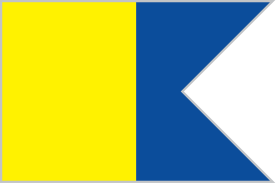 | Alfa | I have a diver in the water. Keep clear and navigate at low speed. |
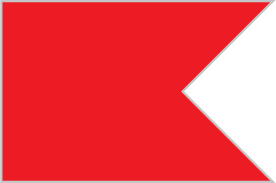 | Bravo | I am loading or unloading, or carrying dangerous cargo. |
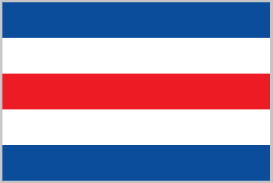 | Charlie | Yes (affirmative, or “The meaning of the previous group should be interpreted as affirmative”). |
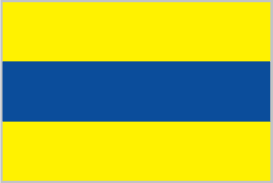 | Delta | Keep clear of me; I am manoeuvring with difficulty. |
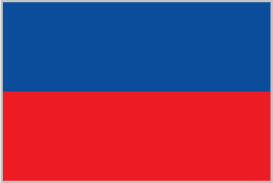 | Echo | I am turning to starboard. |
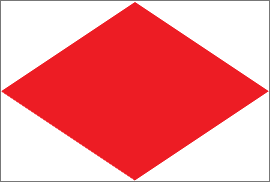 | Foxtrot | I am disabled; communicate with me. |
Learn more about: Sailors’ knots.


