


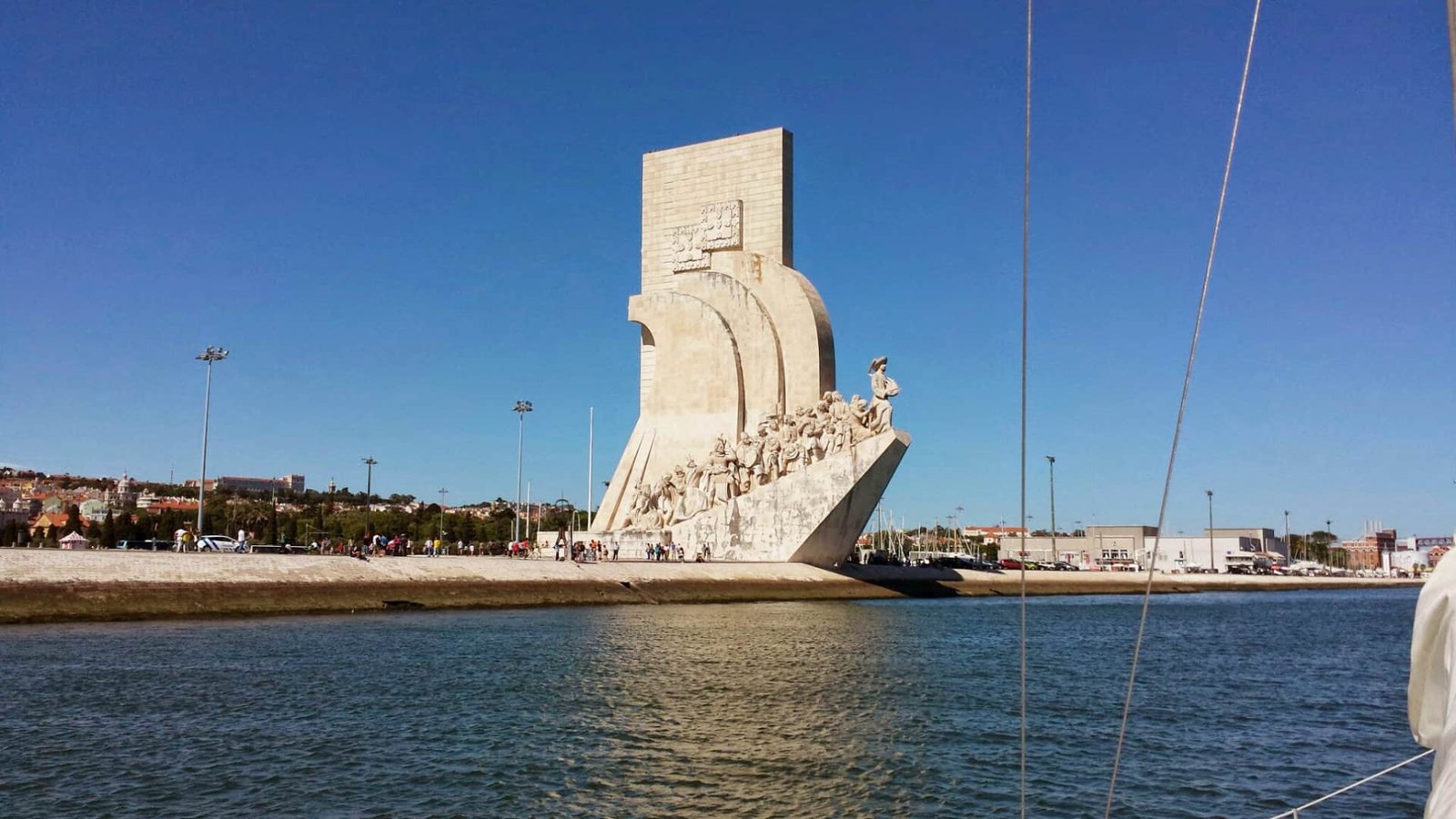
The Discoveries Monument is flanked at the base by two ramps that meet at the prow, featuring the figure of Prince Henry the Navigator. Ferdinand Magellan, Luís de Camões, Pedro Álvares Cabral, and Vasco da Gama are also among the 32 figures found on the monument. They represent a historical summary of personalities directly or indirectly linked to the Discoveries.
During its creation, and keeping in mind the high relevance and expression of this monument, no detail went unnoticed. Looking at the back of the Discoveries Monument, it is possible to identify a sword, and the pavement at its entrance features a massive wind rose and a map with the routes of the Portuguese discovery voyages inscribed in multicolored marble. Finally, framing this representation is one of the many beautiful examples of Portuguese pavement, with its undulating patterns in black and white limestone.
The Portuguese have always shown pride in their history and particularly in the Age of Discoveries. It was from the Tagus River estuary that the fleets of great navigators set out to discover the world in the 15th century.
Initially, in 1940, the original monument was erected for the Portuguese World Exhibition, built with perishable materials. The architect and filmmaker, Continelli Telmo, was the author of this work. However, three years later, as it was an ephemeral and non-permanent construction, its demolition was ordered.
The current monument is a replica, built in stone and concrete, with figures sculpted in limestone. Inaugurated on August 9, 1960, as part of the commemorations for the 500th anniversary of the death of Prince Henry the Navigator, this monument is one of the main points of interest in the city of Lisbon.


