


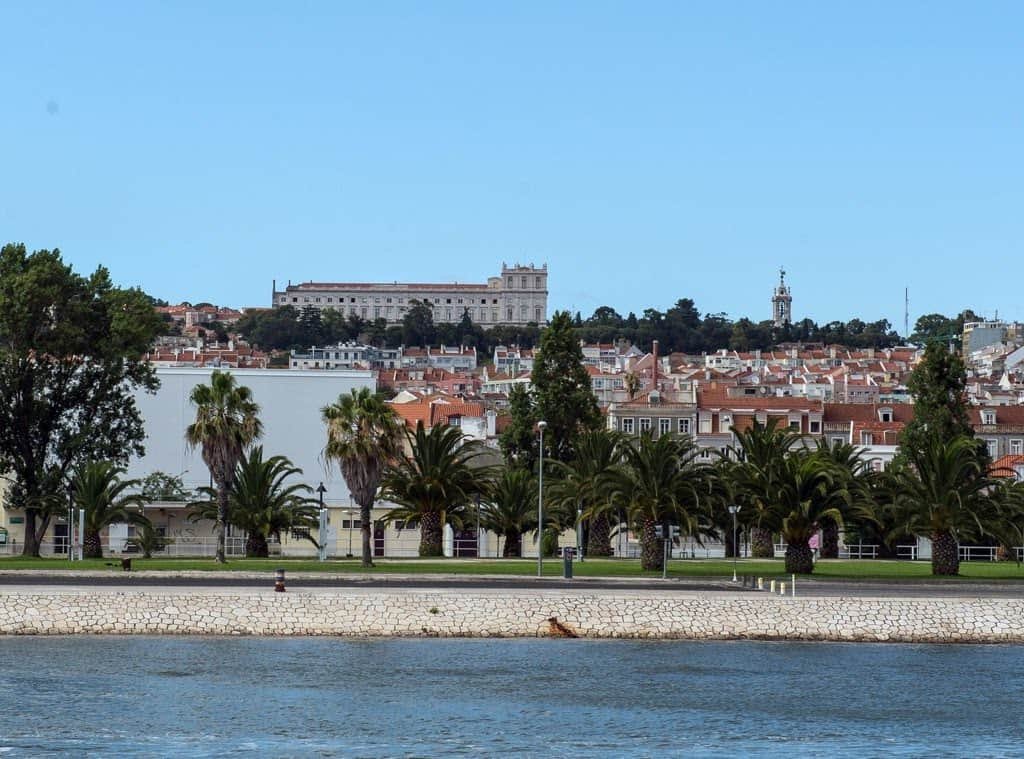
Ajuda Palace is a historic landmark in the Portuguese capital. Built in the 19th century, the palace was designed as a residence for the Portuguese royal family and is now an important national museum.
The Story
After the 1755 earthquake, the Portuguese royal family settled temporarily in a wooden building in the Ajuda area, called the “Real Barraca”. However, in 1794, a fire consumed this temporary structure, leading to the decision to build a permanent masonry palace on the same site.
The history of Ajuda Palace begins in the 18th century, when King D. João V decided to build a residence for his wife, Queen Maria Ana of Austria, on the hill of Ajuda. The original project, however, was never completed due to financial and political problems. It was only in the 19th century, during the reign of King Fernando II, that construction on the palace was resumed.
The initial project was entrusted to the architects Manuel Caetano de Sousa, José da Costa e Silva and Xavier Fabri, who designed a palace inspired by the great European royal residences of the time. The building would be later, between 1817 and 1844, guided by the architect Francisco Rosa.
From the reign of King Luís I (1861-1889), Ajuda Palace became the official residence of the Portuguese royal family, a status it maintained until the establishment of the Republic in 1910. Queen Maria Pia de Saboia, wife of Luís I, played a central role in decorating the palace and enriching its artistic collections, leaving a legacy of splendor that can still be appreciated today.
The Construction
Ajuda Palace is an imposing building with a stone facade, towers, and pinnacles. Its interior is equally impressive, with decorated reception rooms, painted ceilings, the finest and most beautiful furniture, and large, precious pieces of tapestry, painting, and goldsmithery.

The Throne Room and the interior decoration reveal a Neo-Baroque decorative taste, while the building’s architecture is Neo-Classical. In the vestibule, the 47 statues signed by Portuguese artists are worth highlighting.
In 1968, it opened to the public as a house-museum, and since the 1980s, it has stood out as a museum institution on the national and international scene.
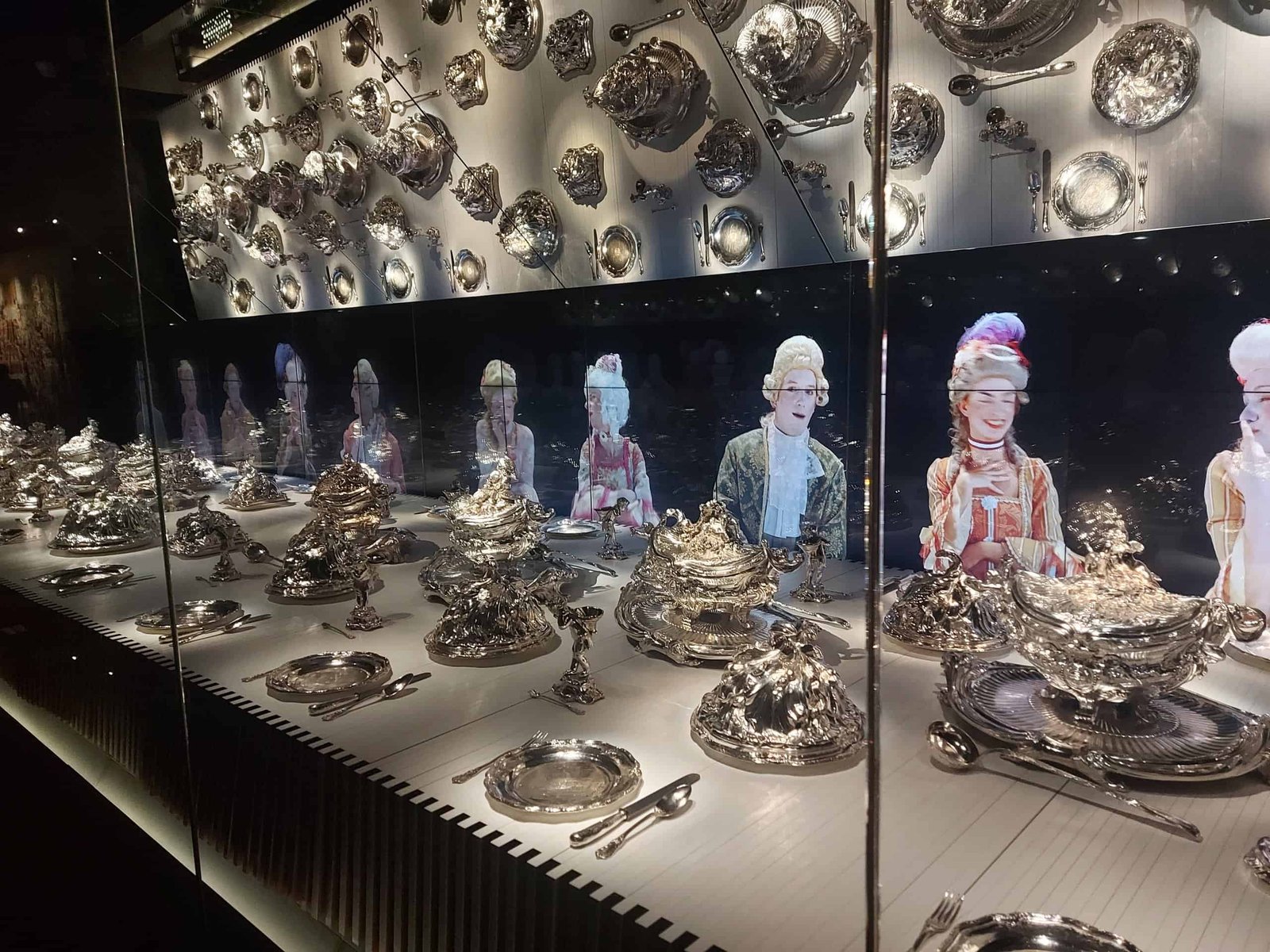
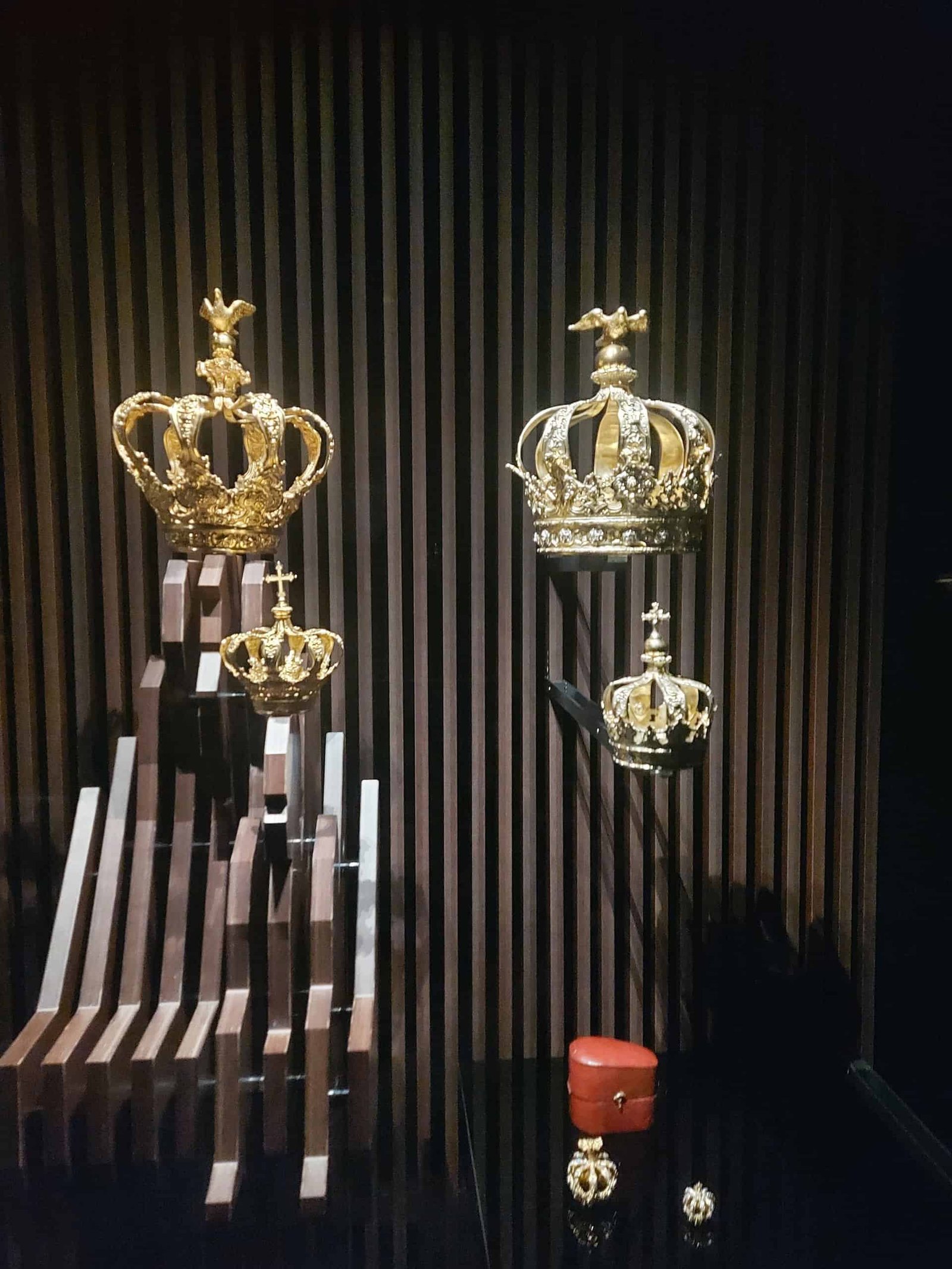
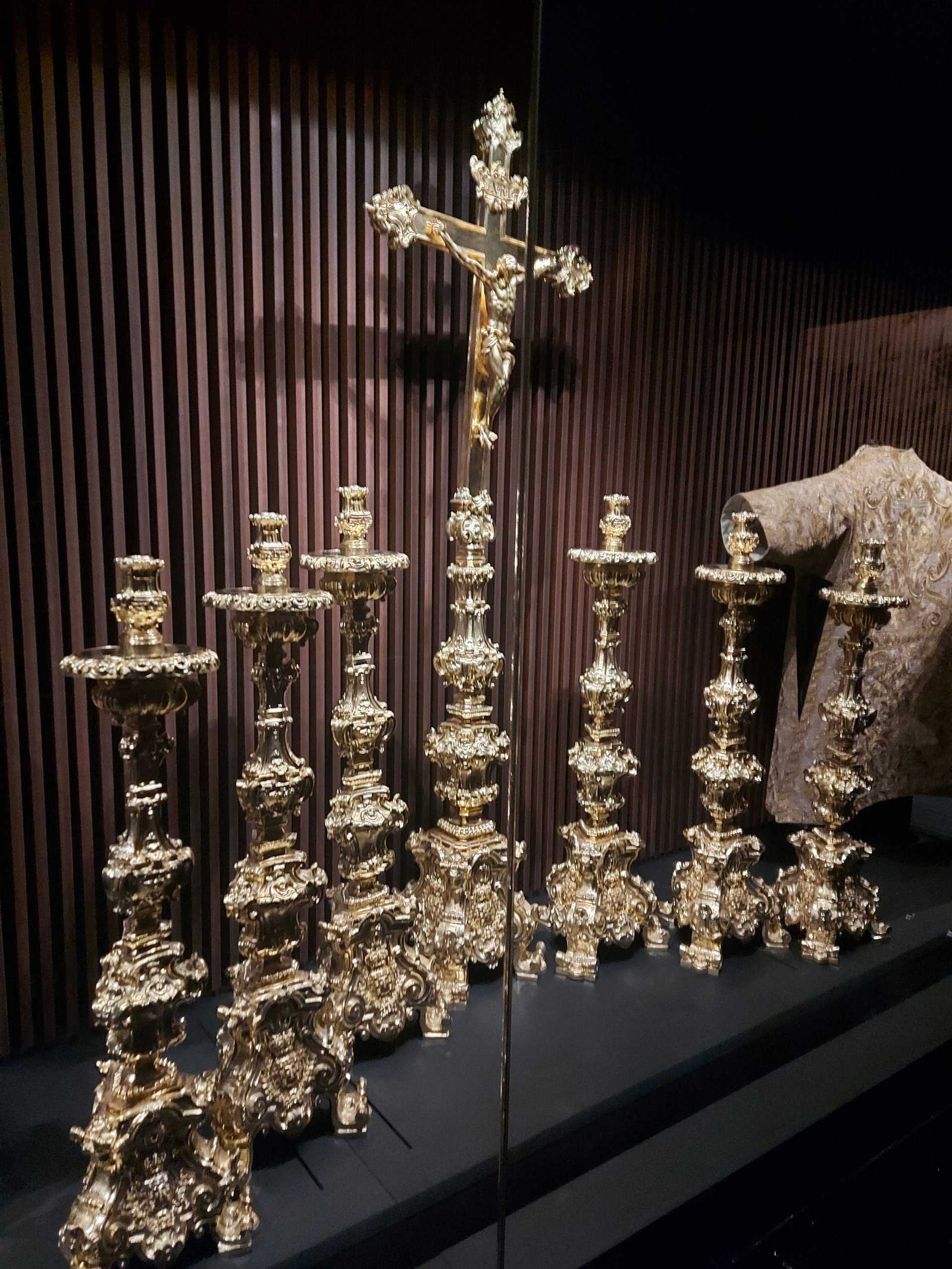
Royal Treasure Museum
In June 2022, the Royal Treasure Museum was inaugurated, where a large part of the former Portuguese Royal House’s assets are permanently on display, including works belonging to the Crown as well as those from the former private collections of various members of the Portuguese royal family.
Today, Ajuda Palace is an important national museum, with permanent exhibitions on the history of the Portuguese royal family and the palace’s architecture and decoration. The museum also offers guided tours and educational programs for schools.


