


The River Tagus played a crucial role in the formation and development of the first peoples in the region we know today as Lisbon. As such, its geostrategic importance shaped the course of history and influenced human occupation along the riverbanks. After all, it was the existence of the River Tagus that led to the city being born here. For the ships that came from the Mediterranean to the countries further north in Europe, the natural bay of the Tagus estuary provided the first safe haven they found.
The Phoenicians, Carthaginians, Romans, Visigoths and Moors are just a few examples of the peoples who recognized the strategic importance of the River Tagus. As a result, each left their mark on the region, contributing to the rich cultural tapestry that characterizes the area around Lisbon.
In this article, we’ll explore various facts about the Tagus River in Portugal, its curiosities and the importance it has played over the centuries.
The origin and course of the Tagus River
It rises in the Albarracim mountains, in the region of Aragon, Spain, at an altitude of 1,593 meters. The Tagus, in Latin Tagus, is the longest river in the Iberian Peninsula.
The river crosses Spanish Extremadura before entering Portuguese territory. In other words, along its course, it passes through various Spanish towns and cities, such as Toledo, Aranjuez and Talavera de la Reina. In Portugal, the River Tagus passes through Abrantes, Santarém, Vila Franca de Xira, Lisbon and many other cities.
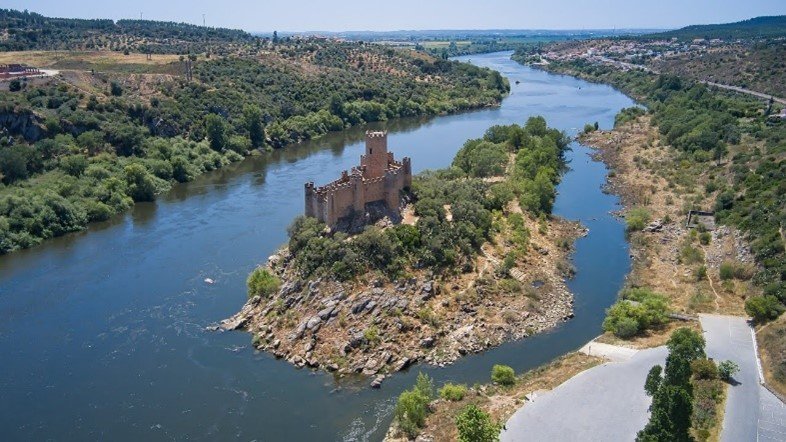
The course of the River Tagus in Portugal is marked by stunning landscapes, valleys and even features several islands. The most famous is the island of Almourol Castle. This medieval fortification has become one of the most beautiful symbols. Built in the 12th century, Almourol Castle served as a military fortification and today is a historic landmark, attracting tourists from all corners.
Furthermore, the river has significant ecological importance, sheltering a variety of species such as the Flamingo, the Greylag Goose, the Teal, the Dunlin, the Grey Plover, the Little Bustard and the Black-tailed Godwit (Limosa limosa).
The Tagus estuary and the departure of the Carracks and Caravels
The Tagus estuary—the largest estuary in Europe—is a protected area within a nature reserve, covering around 15,000 hectares. Moreover, the Tagus estuary played a crucial role in the great Portuguese Discoveries. It was from Lisbon that the carracks and caravels departed on the great Portuguese maritime adventures.
In the 15th century, Portugal was at the height of its Age of Discovery. Under the command of great navigators such as Vasco da Gama, Ferdinand Magellan and Pedro Álvares Cabral, Portuguese vessels departed from the Tagus estuary towards new maritime routes, treasures and knowledge. These expeditions were, undeniably, responsible for the beginning of globalization.
The River Tagus and its curiosities
At approximately 1,100 kilometers in length, the River Tagus has many stories to tell. It holds a series of curiosities that add a special touch to its history. Here are some of them:
The gold of the Tagus
According to some legends and historical accounts, the Tagus River was a source of gold. It is said that D. Afonso Henriques, the first king of Portugal, paid a tribute to the Pope using gold extracted from the Tagus. Furthermore, kings D. Dinis and D. João III had their scepters made with gold from the river’s sands. Although this wealth is no longer found today, the story of the Tagus gold adds a magical element to its trajectory.
The wave from the 1755 Earthquake
On November 1, 1755, a devastating earthquake struck the lower part of Lisbon and other areas along the River Tagus. The wave generated by the earthquake—accounts suggest it was around 15 meters high—surged up the river and flooded the city, causing unprecedented destruction. After the floods came fires, disease and famine. This tragic event left a deep mark on the history and memory of the Portuguese people.
The bridges that cross the Tagus
Over the years, two bridges have been built that cross the River Tagus in Lisbon. The 25 de Abril Bridge, inaugurated in 1966, and the Vasco da Gama Bridge, inaugurated in 1998. The 25 de Abril Bridge, one of the largest suspension bridges in Europe, connects Lisbon to Almada, while the Vasco da Gama Bridge links Lisbon to Alcochete, Moita and Montijo. These bridges are important structures and facilitate mobility in the region.
The legend of its name
According to Silius Italicus, the river was initially called Tago—the name of an Iberian king who was cruelly murdered by Hasdrubal (a Carthaginian general). This king of great beauty and courage was nailed to a cross in full view of everyone.
A boat tour on the River Tagus
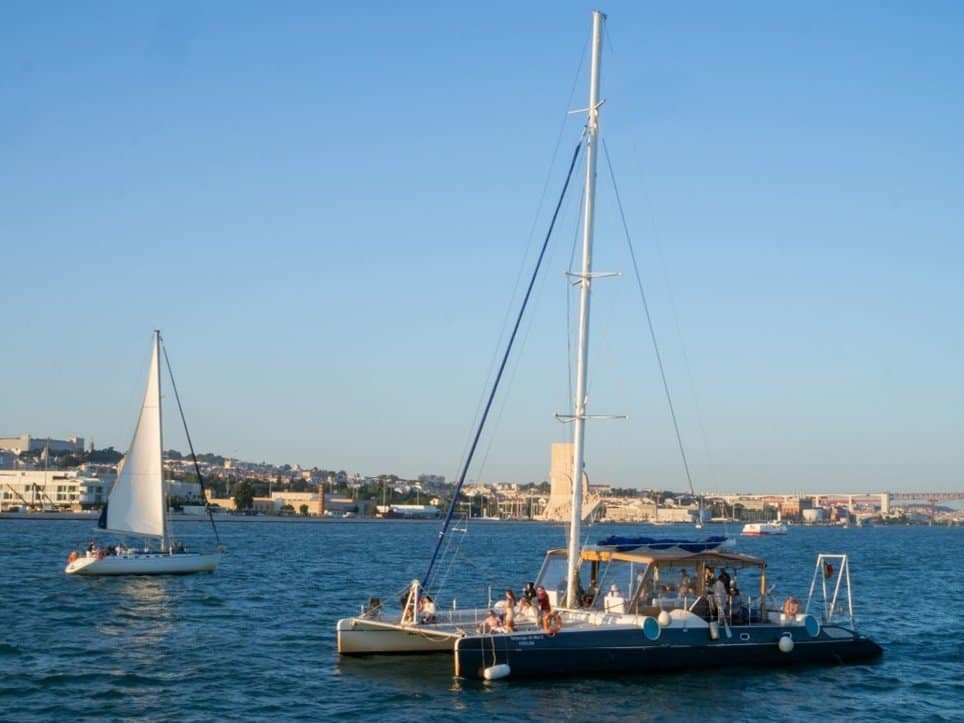
One of the best ways to appreciate the beauty and history of the River Tagus is to take a boat tour. Sailing the river’s waters, observing the stunning landscapes and learning about its curiosities. It’s an unforgettable experience!
The River Tagus is much more than a watercourse. It is a symbol of Portugal’s history, a protagonist of the great Discoveries and, above all, a natural treasure. Its waters witnessed the departure of the carracks and caravels that changed the course of history. Certainly, its curiosities and legends add a special touch to its trajectory.
A boat tour on the River Tagus is a unique opportunity to immerse yourself in this history, contemplate the natural beauty and learn a little more about Portugal’s past.
One thing is certain: this experience will be unforgettable and full of good memories.


