


Another show on the Tagus!
On April 3rd, celebrations took place for the first air crossing of the South Atlantic, carried out by Sacadura Cabral and Gago Coutinho.
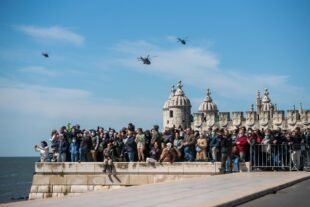
It was a military ceremony and naval air parade, organized by the Portuguese Navy and the Air Force. It was presided over by the President of the Republic, Marcelo Rebelo de Sousa.
People packed the banks of the Tagus River to attend this remarkable event, treated to an overflight of Portuguese Air Force planes and helicopters.
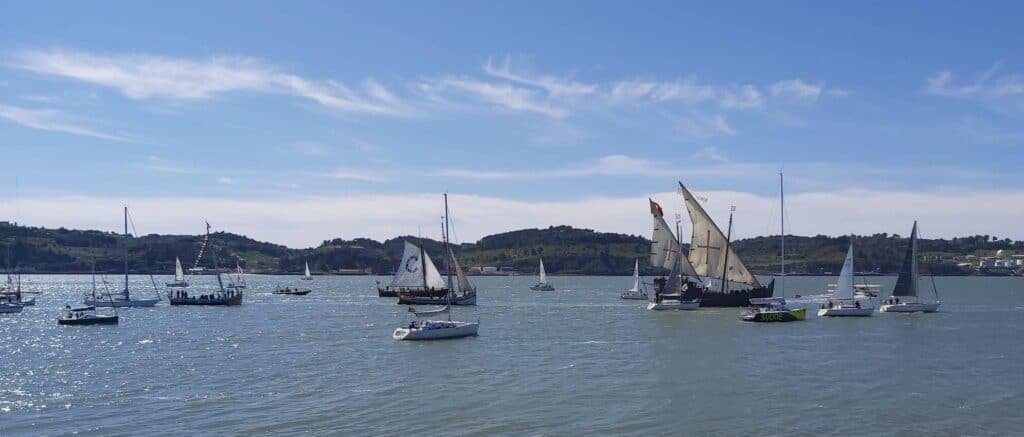
In the water, a fleet of over 100 vessels – private, business and public – joined this moment, providing an unparalleled spectacle.
The incredible story of the first air crossing
On March 30th, 1922, the first air crossing of the South Atlantic began, in the context of the commemorations of the First Centenary of the Independence of Brazil. It was carried out in a single-engine seaplane, equipped with a Rolls-Royce engine and specially designed for the trip – baptized as Lusitânia.
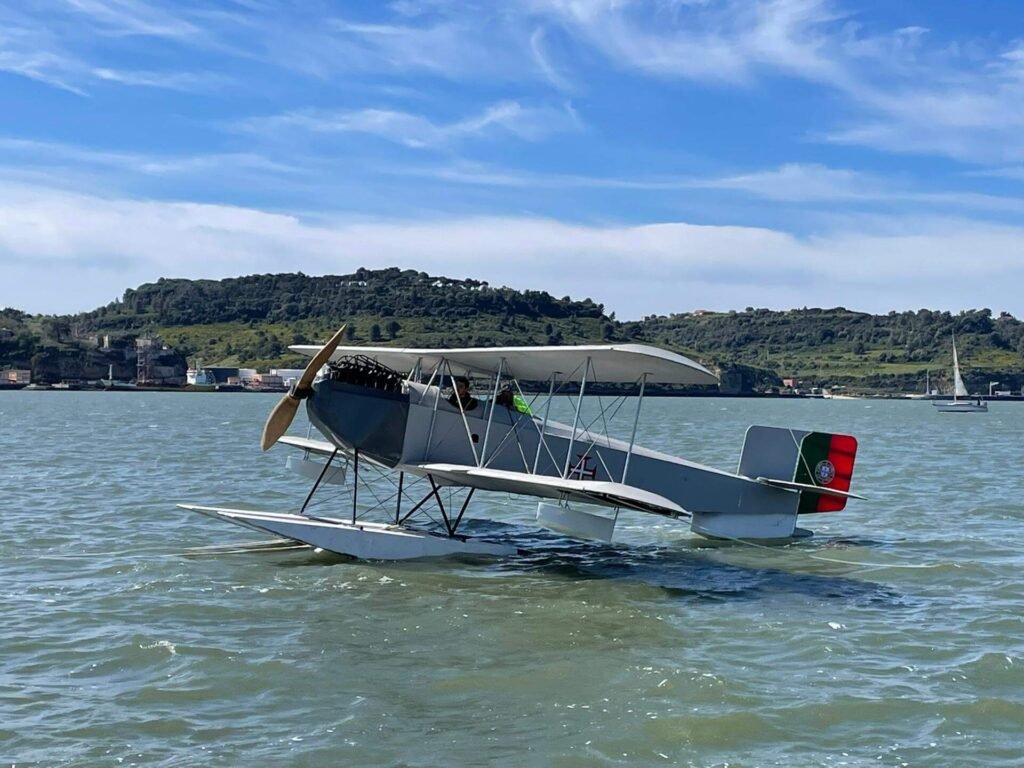
On the same day, they completed the first leg of the journey in Las Palmas, in the Canary Islands, although they noticed excessive fuel consumption.
On April 5th they departed for the Island of São Vicente, in the Cape Verde Archipelago, covering 850 miles. They remained there until April 17th for repairs to the seaplane – which was taking on water in the floats. Next, they departed from the port of Praia, on the Island of Santiago, heading to the Archipelago of São Pedro and São Paulo, in Brazilian waters, where they landed on the 18th without the aid of wind. As the sea was rough, it caused damage to the Lusitânia, which lost one of its floats. The aeronauts were picked up by a Cruiser of the Portuguese Navy, which took them to Fernando de Noronha. Despite being exhausted by the 1,700-kilometer flight and the crash landing, they celebrated the precise discovery of those rocks in the middle of the South Atlantic, using only the astronomical navigation method created by Gago Coutinho.
Continuing the historic feat
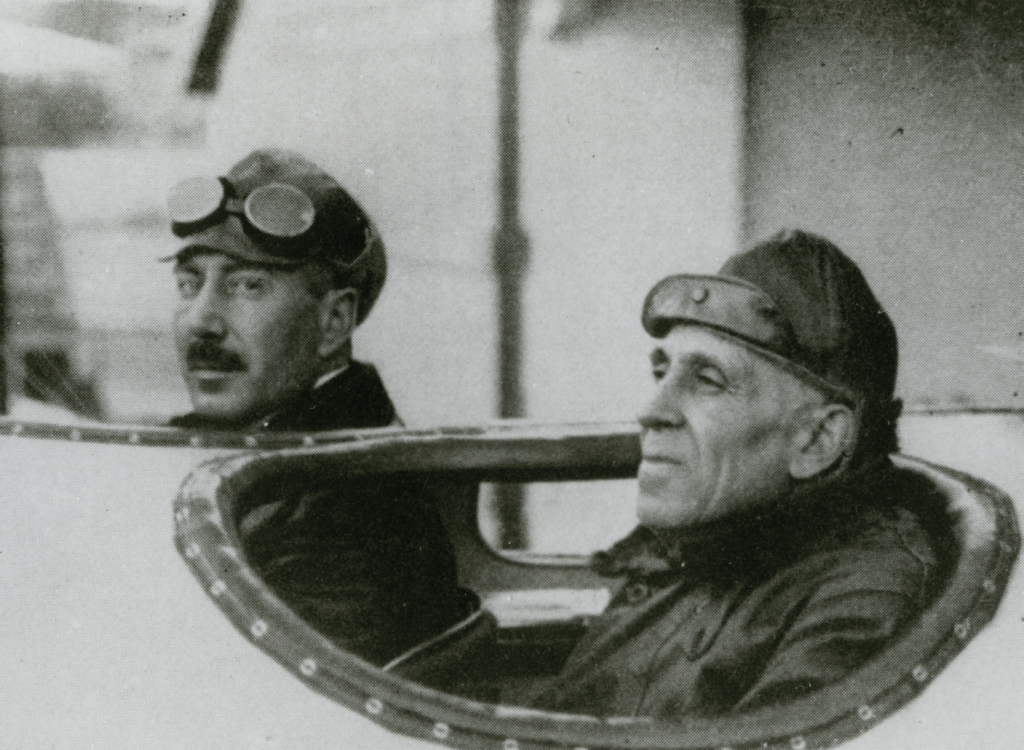
With Portuguese and Brazilian public opinion involved in the feat, the Portuguese Government sent another seaplane, baptized as Pátria, from Fernando de Noronha, aboard the Brazilian ship Bagé, which arrived on May 6th. After the seaplane was unloaded, assembled and inspected, on May 11th, they took off from Fernando de Noronha. However, a new accident befell the aeronauts when, having returned and flying over the archipelago of São Pedro and São Paulo to restart the interrupted leg, an engine failure forced them to make an emergency landing, having remained nine hours as castaways until they were rescued by an English cargo ship that was in transit in that region.
After being returned to Fernando de Noronha, they waited until June 5th, when they received a new seaplane, baptized as Santa Cruz, sent to them. The seaplane was transported by ship from Portugal and put in the water at the Archipelago of São Pedro and São Paulo. It was then that it took off heading to Recife, making stops in Salvador, Porto Seguro, Vitória and from there to Rio de Janeiro. It was there that the Federal Capital, on June 17th, 1922, landed in front of Ilha das Enxadas, in the waters of Guanabara Bay.
Enthusiastically acclaimed as heroes in all the Brazilian cities where they landed, the aeronauts had successfully completed not only the first crossing of the South Atlantic, but for the first time in Aviation History. They had traveled over the Atlantic Ocean using only astronomical navigation from the airplane.
One last curiosity
The flight time was only sixty-two hours and twenty-six minutes, covering a total of 8,383 kilometers, although the journey lasted seventy-nine days.


